
Natural Bodybuilding: The Complete Guide to Building Muscle Drug-Free
2026-09-26 · 6 min read
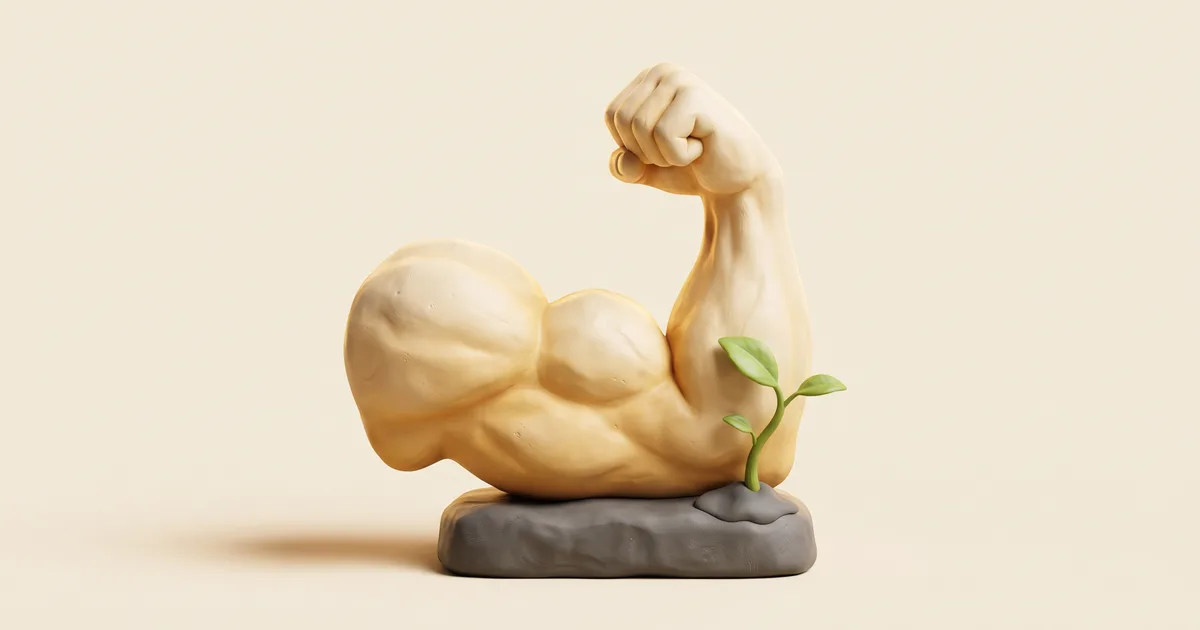
Natural bodybuilding means building muscle without anabolic steroids, SARMs, growth hormone or other performance-enhancing drugs. Just training, food, sleep and time. It's also the most-searched bodybuilding topic worldwide: "natural bodybuilding" and "bodybuilding natural" top Google's bodybuilding queries, and interest grew about 30–40% over the last year.
That makes sense. Social media is full of enhanced physiques presented as natural, and many lifters want to know what's actually possible without drugs. This guide covers realistic expectations, how to train, how to eat, and how to keep progressing for years.
The short answer
- You can build a lot of muscle naturally. The fastest gains come in years 1–2 and slow down after that.
- Train each muscle about twice a week, with 10–20 hard sets per muscle per week, mostly in the 6–15 rep range, pushed close to failure.
- Eat enough protein (about 1.6–2.2 g per kg of bodyweight daily) with a small calorie surplus while building.
- Sleep 7–9 hours. Recovery is where natural lifters win or lose.
- Track your lifts. Slow progress is invisible without records.
How much muscle can you build naturally?
Natural gains follow a steep curve that flattens. A commonly cited rule of thumb for men with good training and nutrition, originally popularised by coach Lyle McDonald, looks like this:
Two takeaways:
- Your first two years matter most. Don't waste them program-hopping or training without a plan.
- After year three, progress is measured in small wins. A kilo of muscle a year sounds small, but over a decade it adds up to a physique most people never reach. You'll only see it if you're tracking.
If someone claims 10 kg of lean muscle in their fifth year of training, be sceptical.
How to train as a natural bodybuilder
Without drugs speeding up recovery, your training has to be efficient. More isn't always better. Better is better.
Frequency: hit each muscle twice a week
Natural lifters appear to get more from spreading volume across the week than from one brutal "bro split" day per muscle. Muscle protein synthesis rises for roughly 24–48 hours after training and then drops back, so training a muscle twice a week gives you more of those windows. Common splits that do this:
| Split | Days/week | Each muscle trained |
|---|---|---|
| Full body | 3 | 3× per week |
| Upper / lower | 4 | 2× per week |
| Push / pull / legs | 6 | 2× per week |
| Push / pull / legs + upper / lower | 5 | ~2× per week |
Volume: 10–20 hard sets per muscle per week
Start near 10 sets per muscle per week and add gradually if you're recovering well. Beyond about 20 sets, most natural lifters just accumulate fatigue. More detail in how many sets per week to build muscle.
Intensity: close to failure, with good form
A set only drives growth if it's hard. Aim to finish most sets with 0–3 reps in reserve, meaning you could have done at most three more. Leave 2–3 in reserve on heavy compounds and go closer to failure on isolation moves.
Progression: the non-negotiable
Every week, try to beat last week with one more rep or a little more weight. That's progressive overload, and for natural lifters it's the main driver of growth. When you stall, don't just add sets. Check sleep, food and technique first, then break the plateau deliberately.
Track this free in GymMonster — on iOS, Android, or right inside Telegram.


How to eat as a natural bodybuilder
| Nutrient | Target | Why |
|---|---|---|
| Protein | 1.6–2.2 g/kg bodyweight/day | Supplies the building blocks for new muscle |
| Calories (bulking) | +200–400 kcal above maintenance | Enough to fuel growth, not so much you gain mostly fat |
| Calories (cutting) | −300–500 kcal below maintenance | Lose fat while holding on to muscle |
| Carbohydrates | Most of the remaining calories | Fuel for hard training |
| Fats | ~20–35% of calories | Hormone health, including natural testosterone |
The main difference from enhanced lifters is that you can't out-muscle a big surplus. Drugs let people gain muscle quickly on huge calorie intakes. A natural lifter on the same diet mostly gains fat. Keep bulks lean and slow: about 0.25–0.5% of bodyweight per week.
For food choices, see our bodybuilding diet food list. For what's worth buying, see the best supplements for bodybuilders. Only a few have strong evidence: creatine, protein powder for convenience, and caffeine.
Recovery: the natural lifter's edge
- Sleep 7–9 hours. Poor sleep lowers testosterone and reduces how much of your weight loss is fat. It's the most powerful legal "supplement" there is.
- Deload every 6–10 weeks. A lighter deload week clears accumulated fatigue so you come back stronger.
- Manage alcohol. Heavy drinking blunts muscle protein synthesis. See alcohol and muscle growth.
Competing as a natural bodybuilder
Plenty of people compete drug-free. Natural federations test athletes (usually polygraph, urine testing, or both), and many have lifetime or multi-year drug-free requirements. If you want to step on stage, read our natural bodybuilding competition prep guide. A typical prep is 16–24 weeks of dieting, with posing practice starting months before.
Natural vs enhanced: a reality check
Scrolling fitness social media can make natural progress feel slow. Keep in mind:
- Many physiques presented as natural aren't. Use lifters with drug-tested competition records as your reference.
- Lighting, pump, angles and dehydration can make someone look 10% bigger in a photo.
- The only fair comparison is you against last year's you. That's why logging your lifts, bodyweight and measurements is so valuable.
Track it or you won't see it
After year one, natural progress is slow enough to be invisible in the mirror from week to week. Records make it visible: your 8-rep incline press went from 30 kg to 34 kg dumbbells, your arms grew half a centimetre, your bodyweight rose 2 kg while your waist stayed the same.
GymMonster logs every set, keeps your personal records per exercise, and shows which muscles you've trained on a muscle heatmap, so you can see progress that's easy to miss in the mirror.
The bottom line
Natural bodybuilding works. It just runs on a longer timeline. Train each muscle about twice a week with hard, progressive sets, eat enough protein in a modest surplus, sleep properly, and track everything. The first two years give you most of your gains; everything after that you earn in small, recorded steps.
Frequently asked questions
How much muscle can you gain naturally in a year?
A common rule of thumb for men is roughly 9–11 kg of lean mass in the first year of good training, about half that in year two, and around 1 kg per year after year four. Women typically gain about half those amounts. Genetics, age and training quality all shift these numbers.
How often should a natural bodybuilder train each muscle?
About twice per week. Spreading 10–20 hard weekly sets per muscle across two sessions takes advantage of the 24–48 hour window of elevated muscle protein synthesis after training, which appears to suit natural lifters better than one big session per muscle.
How much protein do natural bodybuilders need?
Around 1.6–2.2 grams per kilogram of bodyweight per day. Going higher is safe for healthy people but offers little extra muscle-building benefit for most.
Can you look like a bodybuilder without steroids?
You can build a very muscular, lean physique naturally, and drug-tested natural federations prove it every year. You won't reach the extreme size of enhanced open bodybuilders, and progress takes years rather than months.
Start tracking your workouts free
GymMonster is free on iOS and Android — or open it right inside Telegram, no download needed. Log your first set in under a minute.