Push/Pull/Legs: A Complete Beginner's Routine (+ a Free Way to Track It)
2026-06-16 · 2 min read
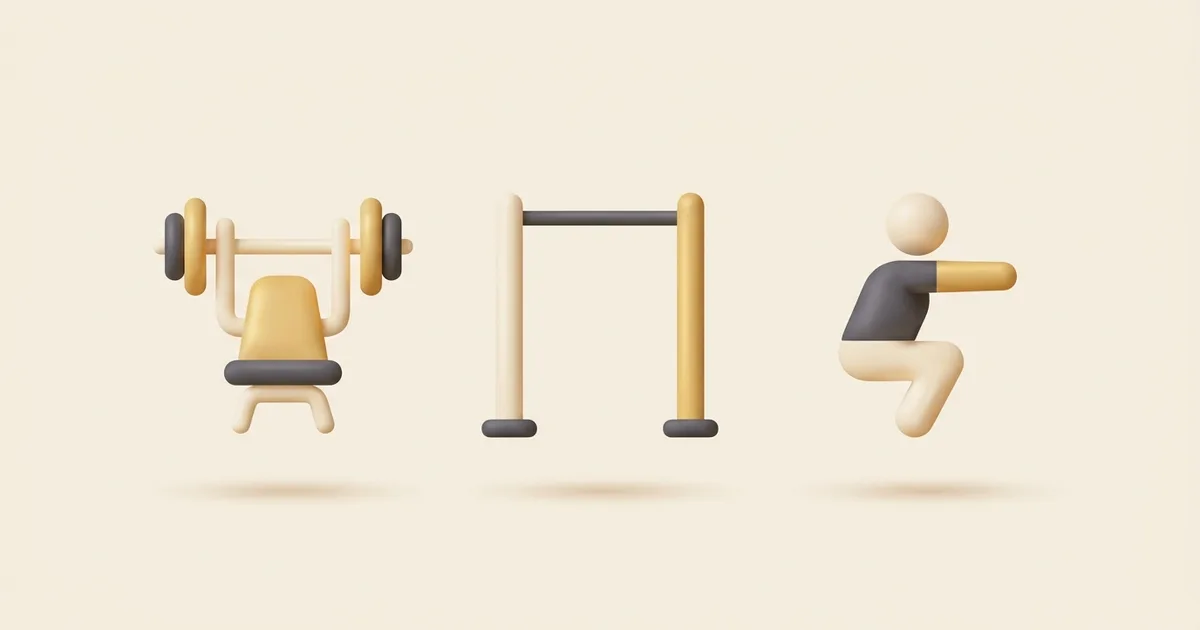
Push/Pull/Legs — "PPL" — is one of the most popular training splits for a reason: it's simple, it scales from 3 to 6 days a week, and it groups muscles that naturally work together. This guide gives you a complete beginner PPL routine you can start this week, plus how to track it so the effort actually turns into progress.
What is the push/pull/legs split?
You divide your training into three day types based on movement pattern:
- Push — chest, shoulders, triceps (you push the weight away).
- Pull — back and biceps (you pull the weight toward you).
- Legs — quads, hamstrings, glutes, calves.
Run as 3 days a week (one of each) for beginners, or 6 days (each twice) once you're recovering well. The beauty is balance: every major muscle gets hit, and no session is a two-hour marathon.
The beginner PPL routine
Aim for 3 sets of 8–12 reps unless noted. Rest 90–120 seconds between sets.
Push day
- Barbell or dumbbell bench press — 3×8–10
- Overhead shoulder press — 3×8–10
- Incline dumbbell press — 3×10–12
- Lateral raises — 3×12–15
- Triceps pushdown — 3×12–15
Pull day
- Lat pulldown or pull-ups — 3×8–10
- Barbell or dumbbell row — 3×8–10
- Face pulls — 3×12–15
- Biceps curls — 3×10–12
- Hammer curls — 3×10–12
Legs day
- Squat (barbell or goblet) — 3×8–10
- Romanian deadlift — 3×8–10
- Leg press — 3×10–12
- Leg curl — 3×12–15
- Calf raises — 3×15–20
Track this free in GymMonster — on iOS, Android, or right inside Telegram.


How many days a week should you do PPL?
- 3 days (P/P/L): ideal for true beginners — plenty of recovery, easy to stay consistent.
- 4–5 days: rotate the cycle continuously (Push, Pull, Legs, rest, Push…).
- 6 days (PPLxPPL): for intermediates who recover well and want more volume.
Consistency beats optimization. Three solid sessions you actually show up for will out-build a perfect six-day plan you abandon in two weeks.
The part most beginners skip: tracking
A routine only works if you push it forward over time. That means writing down what you lifted and beating it — a little more weight or a rep more — week after week. This is progressive overload, and it's the real engine behind getting stronger.
The easiest way to do it is a tracker that's open while you train. GymMonster ships the Push, Pull, Legs, Upper and Full Body routines pre-built — pick PPL, and each session is laid out for you with a place to log every set. No spreadsheet, no separate app to download.
Putting it together
- Pick 3 or 6 days based on your schedule.
- Load the PPL routine and log each set as you go.
- Each week, try to add a rep or a little weight to your main lifts.
- Check your progress charts every few weeks and adjust.
Start the routine, track it honestly, and let the numbers climb.
Frequently asked questions
Is push/pull/legs good for beginners?
Yes. PPL is simple to follow, balances every major muscle group, and works at 3 days a week with plenty of recovery — making it one of the best splits for beginners.
How many days a week is best for PPL?
Beginners do well with 3 days (one push, one pull, one legs). As recovery improves you can run the cycle 4–6 days a week.
How long until I see results from PPL?
With consistent training and progressive overload, most beginners notice strength gains within 4–6 weeks and visible changes within 8–12 weeks.
Can I track a PPL routine for free?
Yes. GymMonster includes Push/Pull/Legs as a pre-built routine and lets you log every set free inside Telegram — no download required.
Start tracking your workouts free
GymMonster is free on iOS and Android — or open it right inside Telegram, no download needed. Log your first set in under a minute.