
Signs of Muscle Hypertrophy: How to Actually Tell If You're Growing
2026-10-12 · 5 min read
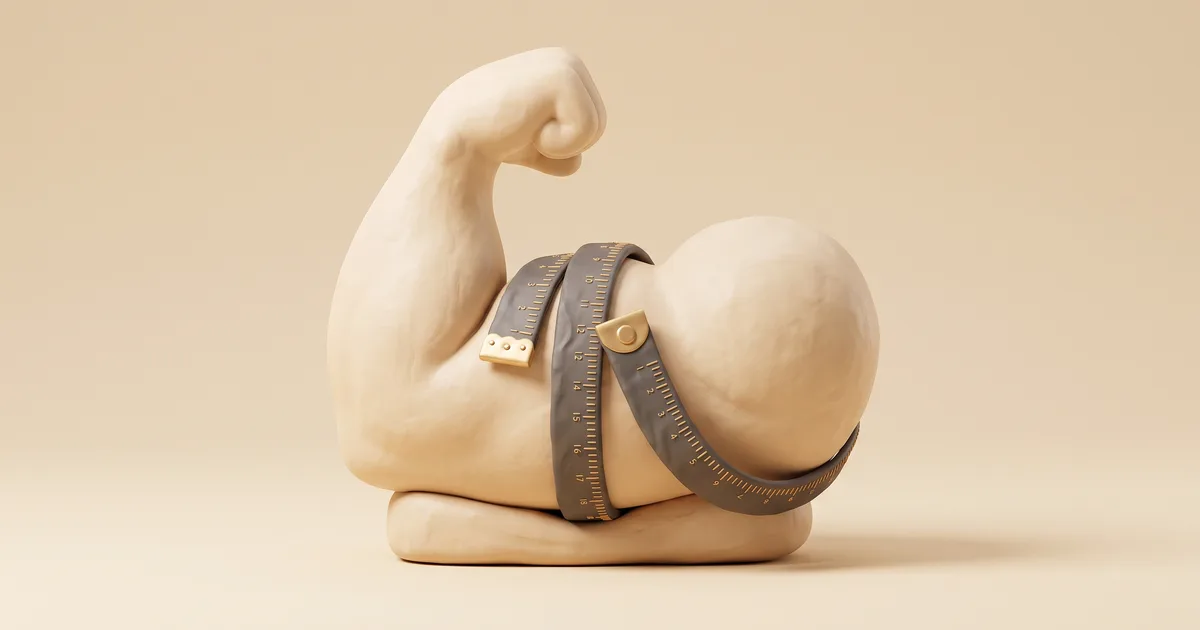
Knowing the signs of muscle hypertrophy matters because the process is slow and easy to misjudge day to day. Muscle growth doesn't happen in a single workout, so the feelings a workout gives you — soreness, a tight pump, feeling "swole" in the mirror under gym lighting — aren't reliable evidence that it's working. This guide separates the signs that actually indicate growth from the ones that are misleading.
The short answer
- Reliable signs: a rising trend in the weight or reps you can lift over weeks/months, increasing body measurements at trained muscle groups, and how clothes fit in specific areas (sleeves, shoulders, thighs).
- Misleading signs: the pump during a workout, muscle soreness, and daily bodyweight on the scale — all fluctuate for reasons unrelated to muscle gained.
- Progress photos, taken consistently, are one of the most useful visual tools, especially over months rather than weeks.
- Growth is slow. Meaningful, visible change typically takes 8–12+ weeks of consistent training, so short time windows won't show much either way.
- Multiple signs together are more trustworthy than any single one alone.
Reliable sign #1: your training numbers are trending up
The single most dependable indicator of muscle growth over time is a rising trend in the weight, reps, or total volume you can handle on your main lifts, sustained over weeks and months — not a single good session, but a consistent trend. This works because strength and the ability to produce more total training volume are closely tied to how much contractile tissue you have, once early-stage nervous system adaptations have leveled off (roughly the first month or two of a new program). If your working weights or rep counts are genuinely climbing over a couple of months, that's strong indirect evidence that muscle is being added. This is exactly why logging every session matters — see progressive-overload-tracking.
Reliable sign #2: body measurements
Tracking circumference measurements — upper arm, thigh, chest, calf — with a tape measure, taken at the same spot and same time of day roughly every few weeks, gives an objective, numeric signal that's harder to fool yourself with than a mirror check. Measurements won't move dramatically week to week, but a steady upward trend over 2–3 months at a trained muscle group is a solid sign of hypertrophy.
Reliable sign #3: how clothes fit
A t-shirt sleeve getting tighter around the arm, a jacket fitting more snugly across the shoulders and back, or pants fitting differently at the thighs are all practical, everyday versions of the measurement signal above. They're less precise than a tape measure but easy to notice without any extra effort, and they reflect the same underlying change.
Table: reliable vs misleading signs
| Sign | Reliability | Why |
|---|---|---|
| Rising strength/volume trend over months | Reliable | Tied to increased contractile tissue once early neural gains level off |
| Body measurements trending up over weeks | Reliable | Objective, consistent metric less prone to daily fluctuation |
| Clothes fitting tighter at trained areas | Reliable (informal) | Reflects real tissue change, just less precise |
| Progress photos over months | Reliable (visual) | Useful when lighting/pose/timing are consistent |
| The pump during a workout | Misleading | Temporary fluid shift into the muscle, gone within hours |
| Muscle soreness after training | Misleading | Reflects muscle damage, a secondary factor, not proof of growth |
| Daily scale weight | Misleading | Dominated by water, food, and glycogen fluctuations day to day |
Track this free in GymMonster — on iOS, Android, or right inside Telegram.


Misleading sign: the pump
The tight, full feeling during and right after a hard set — "the pump" — comes from blood and fluid being pushed into the working muscle, not from new tissue. It fades within hours. A great pump can happen in a workout that contributes little long-term growth stimulus, and a workout with barely any pump can still be highly effective. It's a real physiological event, just not a growth indicator on its own.
Misleading sign: soreness
Delayed-onset muscle soreness reflects muscle damage from training, particularly from unfamiliar movements or a heavy eccentric (lengthening) emphasis. Damage is only a secondary contributor to hypertrophy, and as your body adapts to a given exercise, soreness naturally decreases even while the exercise keeps producing a solid growth stimulus. Chasing soreness as a goal tends to just accumulate unnecessary fatigue.
Misleading sign: the bathroom scale
Bodyweight fluctuates several pounds day to day from water retention, sodium intake, carbohydrate stores (glycogen holds water), and digestive contents. Since building meaningful muscle is also a slow process measured in fractions of a pound per week, day-to-day scale weight is far too noisy to reflect it. A weekly average, tracked over a couple of months, is somewhat more useful — but still incomplete without other signs, since fat and water changes move in the same numbers.
Putting it together
No single sign is conclusive on its own, but when your strength trend, your measurements, and how your clothes fit are all moving the same direction over a couple of months, that combination is strong evidence of real hypertrophy. If none of them are moving after a similar stretch of consistent training, that's a signal to reassess volume, intensity, recovery, or nutrition rather than a sign that hypertrophy training doesn't work for you. For the underlying mechanism behind these signs, see muscle-hypertrophy-explained.
The bottom line
The trustworthy signs of muscle hypertrophy are slow-moving trends — strength, measurements, and fit — not the feelings a single workout leaves you with. GymMonster logs your sets, reps, and weights automatically and tracks personal records over time, giving you an objective record of whether your training is actually working instead of relying on the pump or soreness as a guess.
Frequently asked questions
What are the real signs of muscle growth?
The most reliable signs are a rising trend in the weight or reps you can lift over weeks/months, increasing body measurements at trained muscle groups, and clothes fitting more snugly in those areas — all tracked over time, not from a single session.
Does the pump mean I'm building muscle?
Not directly. The pump is a temporary fluid shift into the working muscle during a set and fades within hours; it's not a reliable indicator of long-term muscle growth.
Is soreness a sign of muscle growth?
Not reliably. Soreness reflects muscle damage, which is only a secondary contributor to hypertrophy. Effective workouts can leave you barely sore, and soreness naturally decreases as you adapt to an exercise.
Should I trust the scale to track muscle gain?
Daily scale weight is too noisy, since it's dominated by water, food, and glycogen fluctuations. A weekly average combined with measurements and strength trends is more useful than scale weight alone.
How long does it take to see signs of muscle hypertrophy?
Most people need 8 to 12 or more weeks of consistent training before signs like measurement changes or a clear strength trend become reliably visible.
Start tracking your workouts free
GymMonster is free on iOS and Android — or open it right inside Telegram, no download needed. Log your first set in under a minute.