
Powerlifting for Women: How to Start, Train, and Compete
2026-10-01 · 5 min read
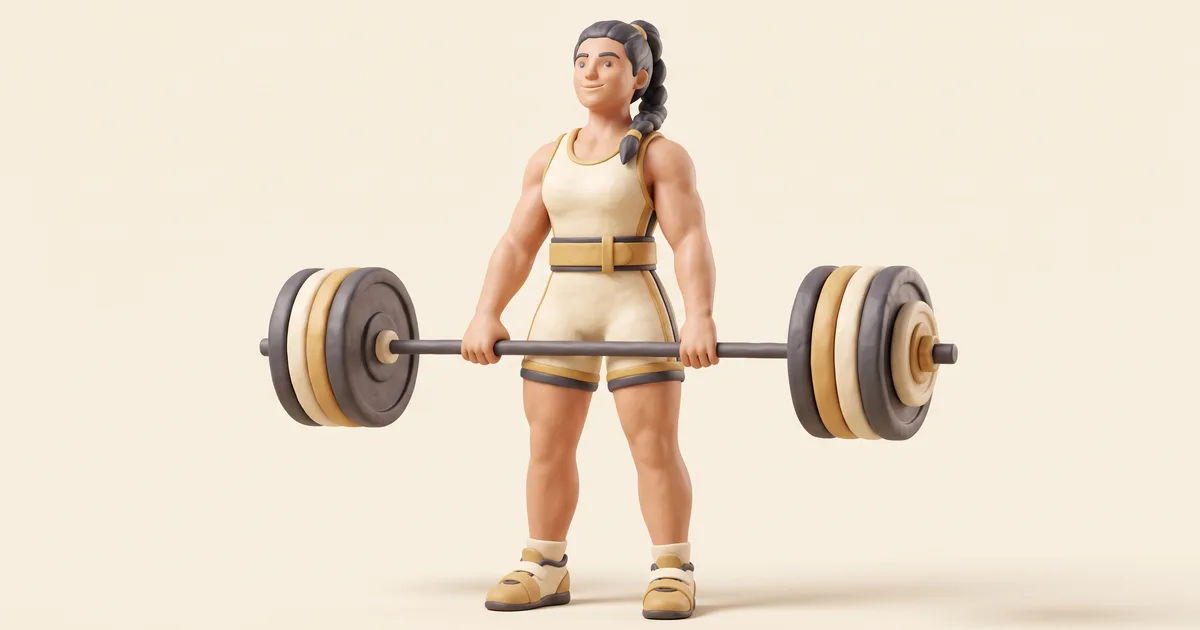
"Powerlifting women" searches rose 140% last year, one of the fastest-growing powerlifting queries. It fits what's happening in gyms and at meets: women's powerlifting is one of the fastest-growing parts of strength sports.
If you're curious, this guide covers how to start, how to train, what "strong" looks like, and what to expect at your first meet.
The short answer
- Powerlifting is lifting as much as possible in the squat, bench press and deadlift. See what is powerlifting.
- Women train the same lifts with the same principles as men.
- Start with 3 days per week, each lift trained with percentages from an estimated max.
- Beginners progress fast: many women add tens of kilos to their squat and deadlift in the first year.
- Your first meet can be within 3–6 months. Novice meets are welcoming.
Why women love powerlifting
- Measurable progress. A number on the bar is objective, which beats obsessing over the mirror or the scale.
- Strength feels good. Carrying shopping, lifting kids and moving furniture all get easier.
- Bone health. Heavy strength training is among the best ways to support bone density.
- Community. Women's powerlifting communities are known for being supportive.
- Performance over appearance. Many women say powerlifting changed how they see their bodies.
Female-specific training notes
| Topic | What to know |
|---|---|
| Upper body | Women's bench press is typically a lower % of their squat and deadlift than men's. Bench 2–3× a week to build it. |
| Fatigue resistance | Women often do more reps at a given % of their 1RM. Rep-based percentage tables may need adjusting upward. |
| Recovery | Often good between sessions, so higher training frequency works well. |
| Menstrual cycle | Effects on strength are small and individual. Adjust to how you feel on the day rather than following a rigid plan. |
| Pregnancy / postpartum | Get medical guidance and a pelvic-health physio. Many lifters train through pregnancy with modifications. |
| Pelvic floor | Leaking under heavy load is common but not something you have to accept. A pelvic-health physio can help. |
A 3-day powerlifting plan for women
Weights are based on a training max (90% of your estimated 1RM). Use our one-rep max guide to estimate it.
| Day | Main work | Accessories |
|---|---|---|
| Mon | Squat 4 × 5 @ 75% · Bench 4 × 6 @ 70% | Hip thrust 3 × 10, lat pulldown 3 × 10, plank |
| Wed | Deadlift 3 × 4 @ 80% · Bench 5 × 3 @ 80% | Split squat 3 × 8, dumbbell row 3 × 10, triceps 3 × 12 |
| Fri | Squat 3 × 3 @ 82.5% · Paused bench 4 × 4 @ 72.5% | Overhead press 3 × 8, face pulls 3 × 15, back extension 3 × 10 |
Add 2.5 kg to squat and deadlift and 1–2.5 kg to bench each week while all sets feel solid (about RPE 8). When progress stalls, move to a periodised block like our 12-week beginner powerlifting program.
Track this free in GymMonster — on iOS, Android, or right inside Telegram.


What does "strong" look like?
Strength standards are rough guides, not targets. Here's an approximate picture for women by training age, as multiples of bodyweight:
| Level | Squat | Bench | Deadlift |
|---|---|---|---|
| Beginner (0–6 months) | ~0.75× BW | ~0.5× BW | ~1.0× BW |
| Intermediate (1–2 years) | ~1.25× BW | ~0.75× BW | ~1.5× BW |
| Advanced (3+ years) | ~1.75× BW | ~1.0× BW | ~2.0× BW |
To compare lifters across bodyweights, powerlifting uses scores like DOTS and IPF GL. See DOTS, Wilks and IPF points explained.
Women's weight classes (IPF)
47, 52, 57, 63, 69, 76, 84 and 84+ kg. Other federations use slightly different classes. At your first meet, don't cut weight. Compete at your natural bodyweight and focus on making your lifts.
Gear you'll want
- Flat shoes for deadlifts; flat or weightlifting shoes for squats
- A belt once your squat and deadlift get heavy
- Knee sleeves for warmth and comfort
- Wrist wraps for bench support
- A singlet (required at most meets) and a plain T-shirt under it
More in the powerlifting equipment guide.
Your first meet: what to expect
- Weigh-in, then equipment check and rack heights.
- Nine attempts: 3 squats, 3 benches, 3 deadlifts.
- Choose conservative openers, weights you could triple on a bad day.
- Aim to go 9 for 9. Setting a PR on your third attempts is a bonus.
- Enjoy it. The atmosphere is often what keeps women coming back.
Track your total
Powerlifting depends on your numbers: top sets, training maxes, meet attempts. A clear log also shows how much stronger you've become, which is often the most motivating part.
GymMonster logs every set in seconds and keeps personal records for your squat, bench and deadlift, so you always know your numbers.
The bottom line
Powerlifting for women means the same three lifts and the same principles: train them three days a week with sensible percentages, bench often, choose accessories to fix weak points, and log every top set. Most women progress fast in year one, and a first meet is closer than you think.
Frequently asked questions
Is powerlifting good for women?
Yes. Powerlifting builds strength, muscle and bone density, offers objective progress, and has a fast-growing, supportive women's community.
How much should a beginner woman squat?
As a very rough guide, many beginner women squat around 0.75× bodyweight, progressing toward 1.25× within a year or two of consistent training. Individual factors vary widely.
What are the IPF women's weight classes?
47, 52, 57, 63, 69, 76, 84 and 84+ kg. Other federations use slightly different weight classes.
Should women train differently for powerlifting?
The lifts and principles are the same. Women often benefit from benching more frequently and may be able to perform more reps at a given percentage of their max, so rep targets can be adjusted.
Start tracking your workouts free
GymMonster is free on iOS and Android — or open it right inside Telegram, no download needed. Log your first set in under a minute.