
Weightlifting Shoes: Do You Need Them? (vs CrossFit, Running, and Flat Shoes)
2026-10-02 · 5 min read
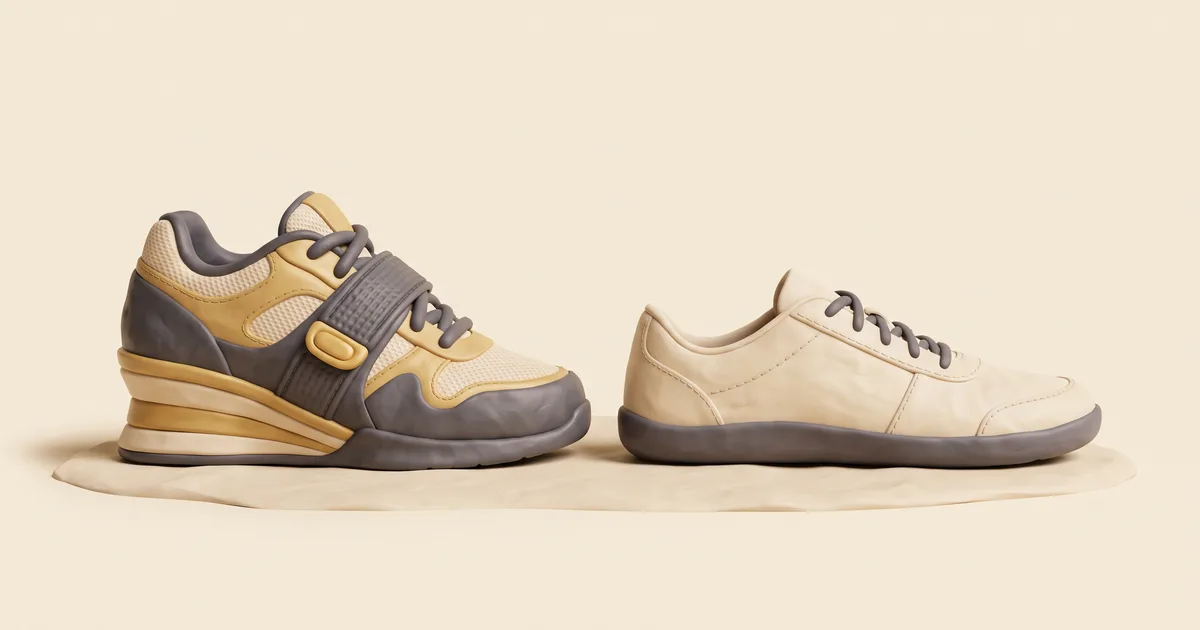
"Weightlifting shoes" is the #1 weightlifting search on Google, and related queries are rising fast: "shoes for weightlifting" +90%, "men's weightlifting shoes" +400%, "women's weightlifting shoes" +350%. "Gym shoes," "CrossFit shoes" and "HIIT shoes" are all among the top searches in their categories too.
The question behind all of those is the same: what should you wear on your feet in the gym? This guide covers weightlifting shoes in detail, then compares them with the alternatives so you can pick the right shoe for your training.
We don't recommend specific brands or models. This guide explains what features to look for.
The short answer
| Training | Best shoe type |
|---|---|
| Olympic weightlifting (snatch, clean & jerk) | Weightlifting shoes (raised solid heel) |
| Squat-focused lifting / bodybuilding legs | Weightlifting shoes or flat shoes, depending on your build and preference |
| Deadlifts | Flat, thin-soled shoes (or socks, where allowed) |
| Bench press | Anything stable with good grip; flat or lifters |
| CrossFit / mixed training | Cross-training shoes (flat, stable, some flexibility) |
| HIIT classes with jumping | Cross-trainers or light training shoes with some cushioning |
| Running | Running shoes, but not for heavy lifting |
What makes a weightlifting shoe different?
- Raised, rigid heel, usually about 15–25 mm (≈0.6–1 inch) of effective heel height. Made of hard plastic, wood or dense rubber that doesn't compress.
- Stiff, non-compressible sole. All the force goes into the floor instead of into the foam.
- Midfoot straps (one or two) plus laces for a locked-in fit.
- Wide, flat, grippy base for stability.
What the raised heel does
The heel lets your knees travel further forward without needing as much ankle flexibility. That means:
- A more upright torso in the squat, which is essential for catching snatches and cleans.
- Deeper squats for people with stiff ankles or long thighs.
- Often more quad involvement.
Who needs weightlifting shoes?
Strong yes:
- Olympic weightlifters. They're considered standard equipment. See Olympic weightlifting for beginners.
- CrossFitters who do a lot of snatches, cleans and overhead squats.
Probably helpful:
- Lifters who struggle to squat deep because of ankle mobility.
- People with long thighs relative to their torso.
- Bodybuilders who want more quad focus in squats.
- High-bar squatters.
Probably not needed:
- Low-bar powerlifting squatters. Many prefer flat shoes because the more hip-dominant style doesn't need the heel.
- Anyone focused mainly on deadlifts and machines.
Choosing weightlifting shoes: what to look for
| Feature | What to look for |
|---|---|
| Heel height | ~15–20 mm is the most common starting point; higher for very upright squatters or stiff ankles |
| Heel material | Solid (TPU, wood, dense rubber) with no squish |
| Fit | Snug through the midfoot, toes not jammed; strap should lock the foot |
| Sole flexibility | Some flex at the forefoot helps split jerks |
| Weight | Heavier = more stable; lighter = better for mixed CrossFit use |
Cross-training (CrossFit) shoes
"CrossFit shoes," "best CrossFit shoes" and brand queries are among the most-searched CrossFit terms. Cross-trainers are the all-rounders:
- Low, firm heel (~0–6 mm drop): stable enough for moderate lifting.
- Flexible forefoot for burpees, box jumps and short runs.
- Rope-climb protection on the sides.
They're the right choice if a single session mixes lifting, jumping and running, as in CrossFit and Hyrox training. For heavy Olympic lifting, you may still want dedicated lifters.
Track this free in GymMonster — on iOS, Android, or right inside Telegram.


Flat shoes for deadlifts and powerlifting
For deadlifts, you want to be as close to the floor as possible with no compression. A thin, flat sole shortens the bar path and keeps you stable. Many powerlifters deadlift in minimalist flat shoes or deadlift slippers. For squats they use either flats (low bar) or lifters (high bar). See our powerlifting equipment guide and how to deadlift.
Why not running shoes?
Running shoes are built to absorb impact with thick, soft foam. Under a heavy barbell, that foam compresses unevenly, so your base moves and you lose force and stability. Fine for cardio, machines and light work, but not ideal for heavy squats and deadlifts.
HIIT shoes
"HIIT shoes" and "best HIIT shoes" searches grew 50–70%. For HIIT classes with jumping and lateral movement, choose a light training shoe with moderate cushioning and lateral support, somewhere between a cross-trainer and a runner. Avoid max-cushion running shoes for side-to-side moves. They roll more easily.
One-shoe vs multi-shoe setups
| Budget / focus | Setup |
|---|---|
| One pair only, general gym | Cross-trainer |
| Lifting focus, 2 pairs | Weightlifting shoes (squats, Olympic lifts) + flat shoes (deadlifts, everything else) |
| Mixed training, 2 pairs | Cross-trainer + running shoe |
Track whether they help
Trying weightlifting shoes? Log your squats for a few weeks before and after. If your depth, bar speed or reps at a given weight improve, you have your answer. That's the same data-driven approach behind progressive overload.
GymMonster logs every set and your personal records, so you can see whether new shoes (or any change) actually improved your lifts.
The bottom line
Weightlifting shoes have a rigid raised heel that helps you squat deeper and more upright. They're essential for Olympic weightlifting and helpful for many squatters. Deadlifts go best in flat, thin soles. Cross-trainers are the best single pair for mixed training, and running shoes belong on the treadmill.
Frequently asked questions
Are weightlifting shoes worth it?
For Olympic weightlifting and CrossFit with lots of snatches and cleans, yes: they're standard equipment. For general lifters, they're worth it if you squat high-bar or struggle to reach depth because of ankle mobility.
Can you deadlift in weightlifting shoes?
You can, but most lifters prefer flat, thin-soled shoes for deadlifts. The raised heel slightly lengthens the pull and shifts your position forward.
What heel height should weightlifting shoes have?
Most weightlifting shoes have an effective heel of about 15–25 mm. Around 15–20 mm is the most common starting point; higher heels suit very upright squatters or those with limited ankle mobility.
Can I lift weights in running shoes?
For light training and machines, yes. For heavy squats and deadlifts, running shoes' soft foam compresses under load and reduces stability, so flat or weightlifting shoes are better.
Start tracking your workouts free
GymMonster is free on iOS and Android — or open it right inside Telegram, no download needed. Log your first set in under a minute.