
Powerlifting Equipment Guide: Belts, Knee Sleeves, Wrist Wraps, and Singlets
2026-10-02 · 5 min read
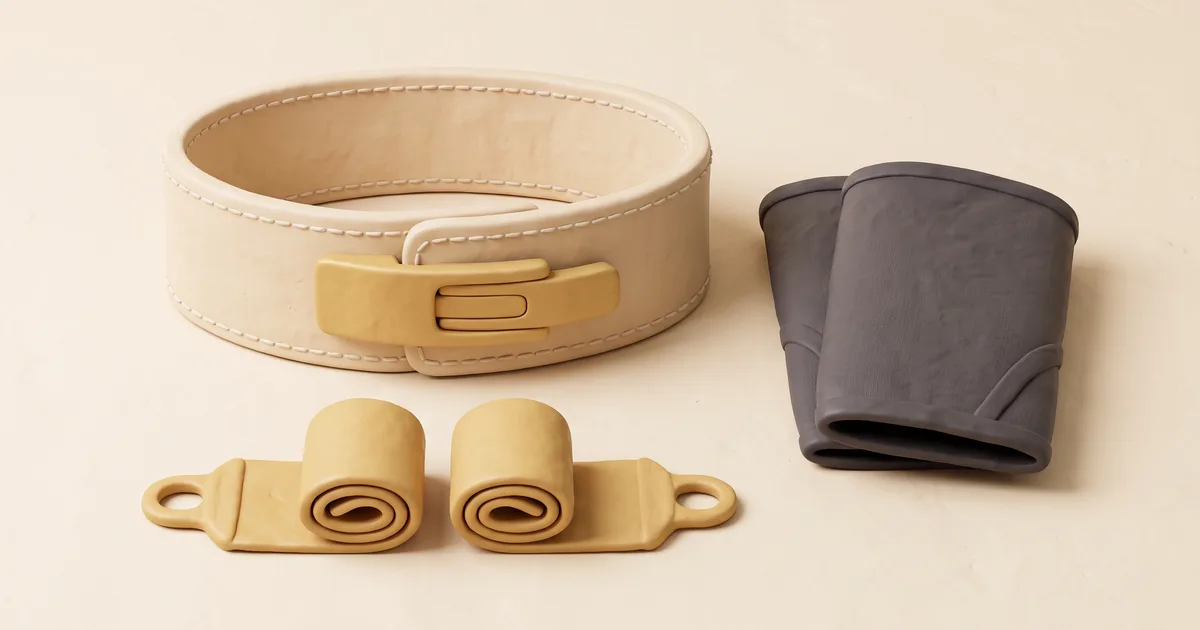
Powerlifting gear is having a moment. "Powerlifting belt" searches rose 90% last year, "powerlifting equipment" rose 90%, "lever belt powerlifting" rose 70%, and "knee sleeves," "singlet" and "powerlifting shop" all feature in the top searches.
The question underneath is always the same: what do I actually need, and in what order? This guide covers each piece of gear, what it does, when it's worth buying and what to look for.
We don't recommend specific brands. This guide focuses on features and federation rules.
The short answer: buy in this order
| Priority | Item | Why |
|---|---|---|
| 1 | Chalk | Cheap, and improves grip on every lift immediately |
| 2 | Suitable shoes | Flat for deadlifts; flat or weightlifting shoes for squats |
| 3 | Belt | The biggest performance aid for heavy squats and deadlifts |
| 4 | Wrist wraps | Support for heavy bench and squats (low-bar) |
| 5 | Knee sleeves | Warmth and comfort; minor support |
| 6 | Singlet | Only needed when you compete |
Powerlifting belts
What a belt does
A belt doesn't "support your back" directly. It gives your abs something to brace against. You take a big breath, push your stomach out into the belt, and increase intra-abdominal pressure. That stiffens your torso so more force goes into the bar. Most lifters lift a bit more with a belt.
When to start wearing one
- Learn to brace without a belt first. Use it on your heaviest sets (roughly 80%+ of your max) of squats and deadlifts.
- Keep warm-ups and lighter work beltless to keep training your own bracing.
- There's no strict "strength threshold." Many lifters start once squats and deadlifts reach about bodyweight or more.
Lever vs prong vs velcro
| Type | Pros | Cons | Best for |
|---|---|---|---|
| Lever | Very fast on/off, consistent tightness | Changing tightness means moving the lever with a screwdriver | Lifters at a stable bodyweight |
| Single prong | Easy to adjust tightness per lift | Slower on/off, harder to tighten | Varying tightness between squat and deadlift |
| Double prong | Same as single prong | Even fiddlier; no real advantage | Personal preference |
| Velcro / nylon | Cheap, flexible, fine for CrossFit | Less rigid; usually not allowed at powerlifting meets | Olympic lifting, CrossFit, general gym |
Specs for powerlifting: 10 cm (4 in) wide the whole way round, 10 mm or 13 mm thick leather. 10 mm is comfortable for most lifters; 13 mm is stiffer and takes longer to break in. Most federations cap belt width at 10 cm.
Track this free in GymMonster — on iOS, Android, or right inside Telegram.


Knee sleeves vs knee wraps
- Knee sleeves (neoprene, usually 5–7 mm thick) keep your knees warm, feel more comfortable and give a small rebound. Allowed in raw/classic powerlifting. Get 7 mm for squatting. They should be snug; you'll probably need to size down.
- Knee wraps are long elastic bandages wound tightly around the knee. They store a lot of energy and can add a meaningful amount to your squat. Not allowed in raw/classic divisions. Used in equipped and "raw with wraps" lifting.
Sleeves are a comfort item, not a strength item. They're nice, but low on the list.
Wrist wraps
Wrist wraps keep your wrist from bending back under heavy benches and overhead presses, and help low-bar squatters whose wrists take strain. Stiff ones help more. Check your federation's maximum length (IPF: 1 m).
Singlets
A singlet is required at most powerlifting competitions, so judges can see your hips and knees. You only need one when you compete. Buy one approved by your federation (e.g. the IPF approved list for IPF affiliates). Wear a plain T-shirt under it for squat and bench.
Shoes
| Lift | Shoe |
|---|---|
| Squat (low bar) | Flat, stable shoes |
| Squat (high bar / long femurs) | Weightlifting shoes |
| Bench | Anything stable; many prefer lifters to drive their legs |
| Deadlift | Flat, thin-soled shoes or deadlift slippers |
Chalk and other small items
- Chalk: by far the best-value grip aid. Check whether your gym allows it (liquid chalk makes less mess).
- Long socks: required for deadlifts at most meets (they protect your shins).
- Lifting straps: fine in training, not allowed in powerlifting competition. See straps vs gloves.
Raw vs equipped: what's legal where
| Item | Raw / classic | Equipped |
|---|---|---|
| Belt | ✅ | ✅ |
| Knee sleeves | ✅ | ✅ |
| Wrist wraps | ✅ | ✅ |
| Knee wraps | ❌ (✅ in "raw with wraps") | ✅ |
| Squat suit / bench shirt / deadlift suit | ❌ | ✅ |
| Straps | ❌ | ❌ |
Always check the current rulebook of the federation you compete in. See what is powerlifting for federations and divisions.
Does gear actually help? Track it.
The only way to know whether a belt or sleeves help you is to compare your numbers with and without them. Log whether each top set was belted and see how your estimated maxes change.
GymMonster logs every set and keeps your personal records, so you can see whether your new belt or sleeves are actually making a difference.
The bottom line
Buy chalk first, then suitable shoes, then a 10 cm belt (lever for convenience, prong for adjustability). Add wrist wraps and knee sleeves later, and a federation-approved singlet only when you're ready to compete. Learn to brace without a belt, use gear on your heaviest sets, and log everything.
Frequently asked questions
Lever or prong belt for powerlifting?
Both work. Lever belts are faster to put on and give consistent tightness, which suits lifters at a stable bodyweight. Prong belts are easier to adjust between lifts. Most powerlifters choose a 10 cm wide, 10 mm or 13 mm thick leather belt.
When should I start using a lifting belt?
After you've learned to brace without one. Use it on your heaviest squat and deadlift sets (roughly 80%+ of max) and keep warm-ups and lighter work beltless.
Are knee sleeves allowed in raw powerlifting?
Yes. Neoprene knee sleeves are allowed in raw/classic divisions. Knee wraps are not allowed in raw/classic, but are permitted in equipped and 'raw with wraps' divisions.
Do I need a singlet for powerlifting?
Only for competition. Most federations require a singlet at meets so judges can see hip and knee positions; check your federation's approved-gear list.
Start tracking your workouts free
GymMonster is free on iOS and Android — or open it right inside Telegram, no download needed. Log your first set in under a minute.