
Lifting Straps vs Gloves vs Chalk: What Actually Helps Your Grip?
2026-10-06 · 4 min read
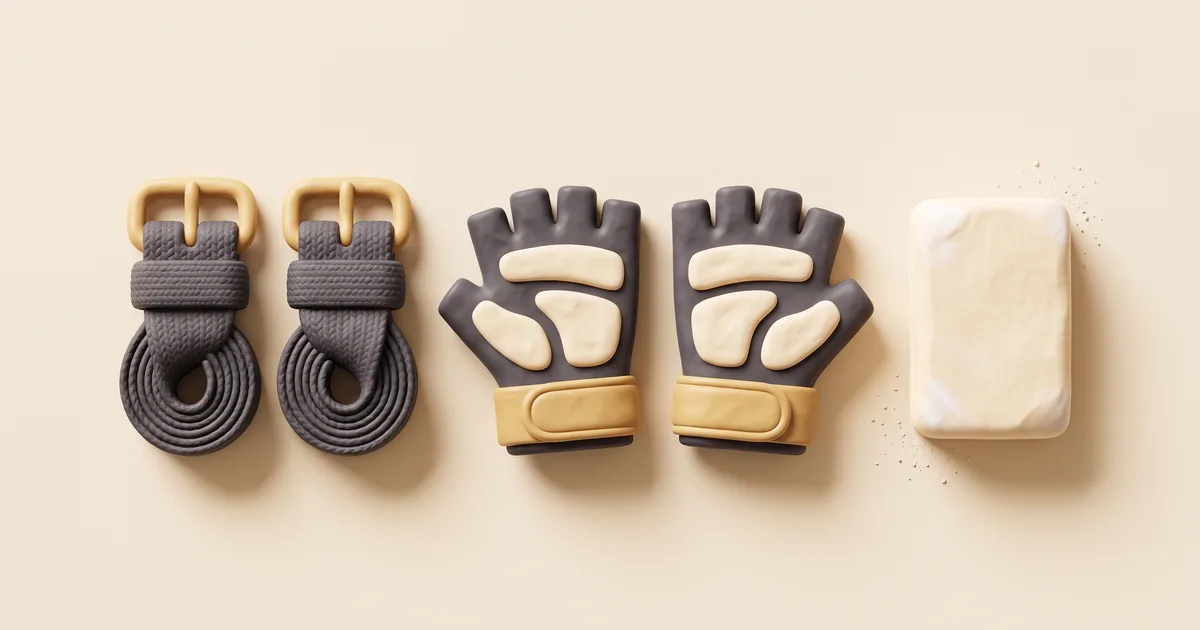
"Weightlifting straps" searches rose 30% and "weightlifting gloves" rose 60% last year. Grip is one of the most common limiting factors in the gym. Your back can row or deadlift the weight, but your hands give out first.
Straps, gloves and chalk all promise to help. They do very different things. Here's how they compare and when each one makes sense.
The short answer
| Chalk | Lifting straps | Gloves | |
|---|---|---|---|
| Improves grip on the bar | ✅ Yes (absorbs sweat) | ✅✅ Most | ⚠️ Can make it worse |
| Lets you lift more on pulls | ✅ Some | ✅✅ A lot | ❌ Rarely |
| Protects hands / calluses | ⚠️ A little | ⚠️ A little | ✅ Yes |
| Allowed in powerlifting meets | ✅ | ❌ | ❌ |
| Allowed in weightlifting meets | ✅ | ❌ | ❌ |
| Best for | Every heavy pull | Heavy rows, shrugs, RDLs, high-rep deadlifts | Comfort; rough bars; skin issues |
Most lifters benefit from chalk on every heavy pull and straps for back work where grip limits the set. Gloves are optional comfort gear.
Chalk: the first thing to try
Chalk (magnesium carbonate) absorbs sweat and increases friction between your hand and the bar. It's cheap, legal in competition and works immediately. If your gym bans loose chalk, liquid chalk is usually allowed and less messy.
Lifting straps
Straps loop around your wrists and wrap around the bar, taking much of the load off your fingers.
Types
| Type | Security | Release | Best for |
|---|---|---|---|
| Lasso / loop straps | High | Moderate | Deadlifts, rows, shrugs |
| Figure-8 straps | Highest (almost locked on) | Slow, hard to bail | Very heavy shrugs and holds |
| Olympic / closed-loop | Moderate | Fast release | Snatch and clean pulls |
When to use straps
- Back exercises where grip fails first: heavy rows, lat pulldowns, shrugs, rack pulls
- High-rep or very heavy Romanian deadlifts and deadlifts
- Late in a session when your grip is already fatigued
- Snatch pulls and high pulls in Olympic lifting training. See Olympic weightlifting for beginners
When not to use straps
- All the time. Your grip needs training too.
- Warm-up sets.
- Powerlifting competition prep top sets. Straps aren't allowed on the platform, so train your competition grip. See powerlifting equipment.
How to use lifting straps (lasso type)
- Put your hand through the loop so the tail runs across your palm, toward your thumb.
- Place your hand on the bar and wrap the tail under and around the bar, away from you.
- Twist your hand to tighten the wrap, then grip the bar over the strap.
- Lift. The strap now shares the load with your fingers.
Track this free in GymMonster — on iOS, Android, or right inside Telegram.


Weightlifting gloves
Gloves are the most debated item. Pros and cons:
| Pros | Cons |
|---|---|
| Protect skin and reduce calluses | Increase the bar's effective diameter, making grip harder |
| More comfortable on rough knurling | Can slip and bunch |
| Useful for people with skin conditions | Don't help you lift more |
| Some have wrist support | Not allowed in competition |
Verdict: gloves are about comfort, not performance. If they help you train consistently, use them. For heavy pulls, most lifters grip better barehanded with chalk. Manage calluses by filing them down rather than covering them.
Grip strength: fix the real problem
Grip aids help, but a stronger grip helps with everything. Easy additions:
| Exercise | Prescription | Trains |
|---|---|---|
| Farmers carries | 3–4 × 30–50 m heavy | Crush grip, whole-body stability |
| Dead hangs | 3 × max time | Support grip, shoulders |
| Double-overhand deadlift warm-ups | Every warm-up set | Grip without extra time |
| Plate pinches | 3 × 20–30 s | Pinch grip |
| Thick-grip / towel pull-ups | 2–3 sets | Grip + back |
A simple rule: go without straps until your grip fails, then add straps for the remaining heavy sets. You'll train your grip and your back fully.
What about hook grip and mixed grip?
- Hook grip: wrap your thumb under your fingers. Very secure and standard in Olympic lifting. It hurts at first.
- Mixed grip: one palm up, one down. Very secure for heavy deadlifts; alternate which hand is supinated to keep things balanced.
Both are covered in how to deadlift.
Track the difference
Want to know whether straps help your rows? Log strapped and unstrapped sets and compare weights and reps over a few weeks.
GymMonster logs every set in seconds and keeps personal records per exercise, so you can see what your back can do when your grip isn't the limit.
The bottom line
Use chalk for every heavy pull. Use straps when grip fails before the target muscle, mostly on back work and heavy Romanian or high-rep deadlifts, but keep training your raw grip too. Gloves are a comfort choice, not a strength aid. Build grip directly with carries and hangs, and log your sets.
Frequently asked questions
Are lifting straps cheating?
No. Straps let your back and legs train with loads your grip can't yet hold. Use them selectively on heavy back work, and keep training your grip without them so it doesn't fall behind.
Are weightlifting gloves worth it?
Gloves improve comfort and protect skin but usually don't help you lift more; they can make grip harder by thickening the bar. Chalk is a better grip aid for heavy lifts.
When should I use lifting straps?
When grip fails before the target muscle, typically on heavy rows, shrugs, lat pulldowns, Romanian deadlifts and high-rep deadlifts, and later in a session when your grip is fatigued.
Are straps allowed in powerlifting?
No. Lifting straps are not allowed in powerlifting or weightlifting competitions, so powerlifters should train their competition grip on heavy deadlift sets.
Start tracking your workouts free
GymMonster is free on iOS and Android — or open it right inside Telegram, no download needed. Log your first set in under a minute.