
What Is Calisthenics? Meaning, Benefits, and the Best Exercises to Start With
2026-10-03 · 4 min read
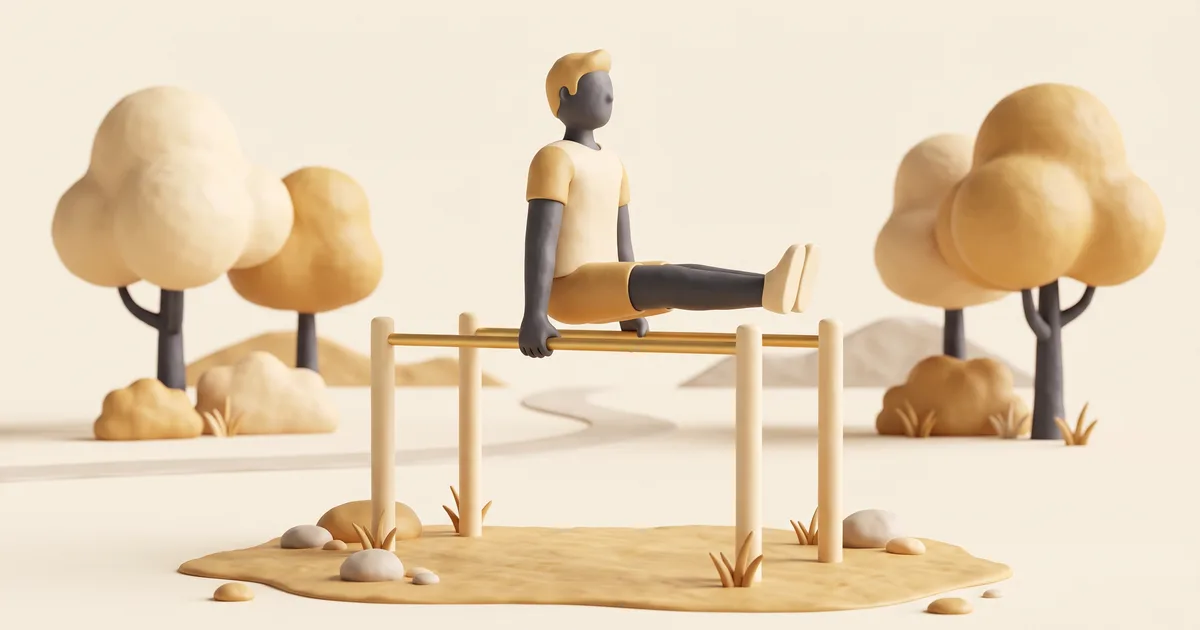
Calisthenics is strength training that uses your own bodyweight as resistance: push-ups, pull-ups, dips, squats, lunges and harder skills like handstands and muscle-ups. Searches for "what is calisthenics" grew 40% last year, and "calisthenics definition" grew 120%. Plenty of people are curious about the training style they keep seeing in parks and on social media.
This guide explains what calisthenics is, what it's good for, the essential exercises, and how to start.
The short answer
- Meaning: from the Greek kallos (beauty) and sthenos (strength), roughly "beautiful strength."
- What it is: bodyweight training that builds strength, muscle, mobility and body control.
- Equipment: minimal. The floor, a pull-up bar, and ideally parallel bars.
- Progression: you make exercises harder by changing leverage and moving to harder variations, not by adding weight.
- Goals: general fitness, muscle, and skills like the handstand, muscle-up and front lever.
Calisthenics meaning and history
Bodyweight training is ancient. Greek athletes, soldiers and gymnasts all used it. The modern revival came from street workout culture: outdoor parks with bars, strong communities, and online videos of impressive skills. Today calisthenics ranges from simple home workouts to competitive freestyle and endurance events.
The benefits of calisthenics
| Benefit | Why |
|---|---|
| Builds real strength | Moving your whole body through space is demanding, especially pull-ups and dips |
| Builds muscle | Hard sets close to failure build muscle, whether the load is a dumbbell or your body |
| Relative strength | You get stronger for your bodyweight, which carries over to sports and daily life |
| Body control and mobility | Skills demand balance, coordination and joint control |
| Accessible and cheap | Train at home, at a park or while travelling |
| Joint-friendly (usually) | Movements follow natural paths; loads rarely spike suddenly |
| Motivating milestones | First pull-up, first muscle-up, first handstand |
The core calisthenics exercises
Five fundamental patterns cover the whole body:
| Pattern | Core exercise | Easier version | Harder version |
|---|---|---|---|
| Horizontal push | Push-up | Incline push-up | Archer / one-arm push-up |
| Vertical pull | Pull-up | Negative / band-assisted | Weighted / one-arm progression |
| Vertical push | Dip | Bench dip | Weighted dip / ring dip |
| Legs | Squat / lunge | Assisted squat | Pistol squat / shrimp squat |
| Core | Hanging leg raise | Knee raise / dead bug | Toes-to-bar / L-sit |
Also useful: inverted rows (horizontal pull), pike push-ups (shoulders), glute bridges and Nordic curls (posterior chain).
Track this free in GymMonster — on iOS, Android, or right inside Telegram.


Calisthenics skills
Many people come to calisthenics for the skills. Roughly in order of difficulty:
Calisthenics vs weight training
Both build strength and muscle. Calisthenics is excellent for the upper body, relative strength and body control. Weights make it easier to load the legs heavily and to progress in small, precise steps. Many people combine them. We compare them in detail in calisthenics vs weights.
How to start calisthenics
- Test yourself: max push-ups, max pull-ups (or dead-hang time), max bodyweight squats, plank hold.
- Pick a structured plan with progressions, like our 8-week calisthenics workout plan.
- Train 3× per week, full body.
- Progress through variations: when you can do 3 sets at the top of your rep range, move to the next variation.
- Log your reps so you know when you've earned the next level.
Related guides: calisthenics for women and military calisthenics.
Common beginner mistakes
- Chasing skills before basics. Muscle-ups come after strong pull-ups and dips.
- Half reps. Full range of motion builds more strength and counts on tests.
- Only training upper body. Legs need bodyweight work too: split squats, pistols, Nordics.
- Random workouts. Without a plan and a log, progress stalls.
The bottom line
Calisthenics means building strength with your own bodyweight, from push-ups and pull-ups to handstands and levers. It's cheap, accessible, builds real strength and muscle, and gives you clear milestones. Learn the five core patterns, follow a progression-based plan and log your reps.
GymMonster logs bodyweight exercises the same way as weighted lifts, with reps per set and personal records, so you can see each progression step add up.
Frequently asked questions
What does calisthenics mean?
Calisthenics comes from the Greek words kallos (beauty) and sthenos (strength). It means strength training using your own bodyweight, such as push-ups, pull-ups, dips, squats and bodyweight skills.
Is calisthenics good for building muscle?
Yes. Muscle growth depends on hard sets close to failure and progressive overload, which calisthenics provides by moving to harder variations. It's especially effective for the upper body.
What are the basic calisthenics exercises?
Push-ups, pull-ups, dips, squats or lunges, and a core exercise such as hanging leg raises. Inverted rows, pike push-ups and glute bridges are useful additions.
Can you do calisthenics every day?
Beginners get better results with three full-body sessions per week and rest days between them. Light skill practice (like handstand drills) can be done more often.
Start tracking your workouts free
GymMonster is free on iOS and Android — or open it right inside Telegram, no download needed. Log your first set in under a minute.