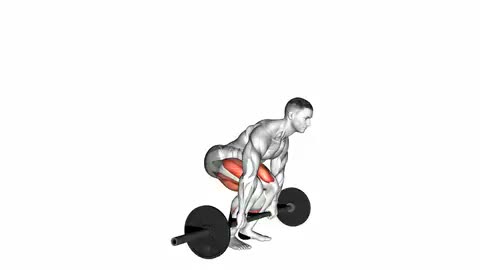
Barbell Bent-over Row Overgrip
The barbell bent-over row is one of the most effective back builders in the gym — it loads the lats, rhomboids, traps and rear delts in a single, heavy pull.
Equipment
Barbell
Difficulty
intermediate
Sets & reps
3-4 sets · 6-10 reps
Muscles worked
Lats, Rhomboids, Rear delts, Traps, Biceps
A bent-over row done with an overhand (pronated) grip on a barbell, targeting the mid-back and lats with a strong emphasis on the upper back and rear delts.
How to do it
- Stand with feet hip-width apart, grip the bar overhand just outside shoulder width.
- Hinge at the hips until your torso is roughly 45 degrees to the floor, knees slightly bent.
- Keep your back flat and let the bar hang at arm's length below your shoulders.
- Pull the bar to your lower ribcage, driving your elbows up and back.
- Squeeze your shoulder blades together at the top, then lower the bar under control.
- Repeat for the full set without letting your torso rise between reps.
Coaching tips
- Brace your core hard — a rounded lower back is the most common way this exercise gets injured.
- Pull with your elbows, not your hands, to keep the tension on your back instead of your biceps.
- Use lifting straps once grip becomes the limiting factor, not your back.
Common mistakes
- Standing too upright, which turns the row into a shrug instead of a back exercise.
- Using momentum to heave the weight up rather than a controlled pull.
Frequently asked questions
Is the barbell bent-over row better than lat pulldowns?
They train the back differently — rows emphasize thickness (rhomboids, mid-traps), while pulldowns emphasize width (lats). Most programs use both.
How much should I row?
Start light enough to hold a flat back for every rep. Most lifters row 40-60% of their bench press weight when starting out.
Start tracking your workouts free
GymMonster is free on iOS and Android — or open it right inside Telegram, no download needed. Log your first set in under a minute.