
How Long Does It Take to Lose Muscle? The Real Timeline
2026-09-13 · 2 min read
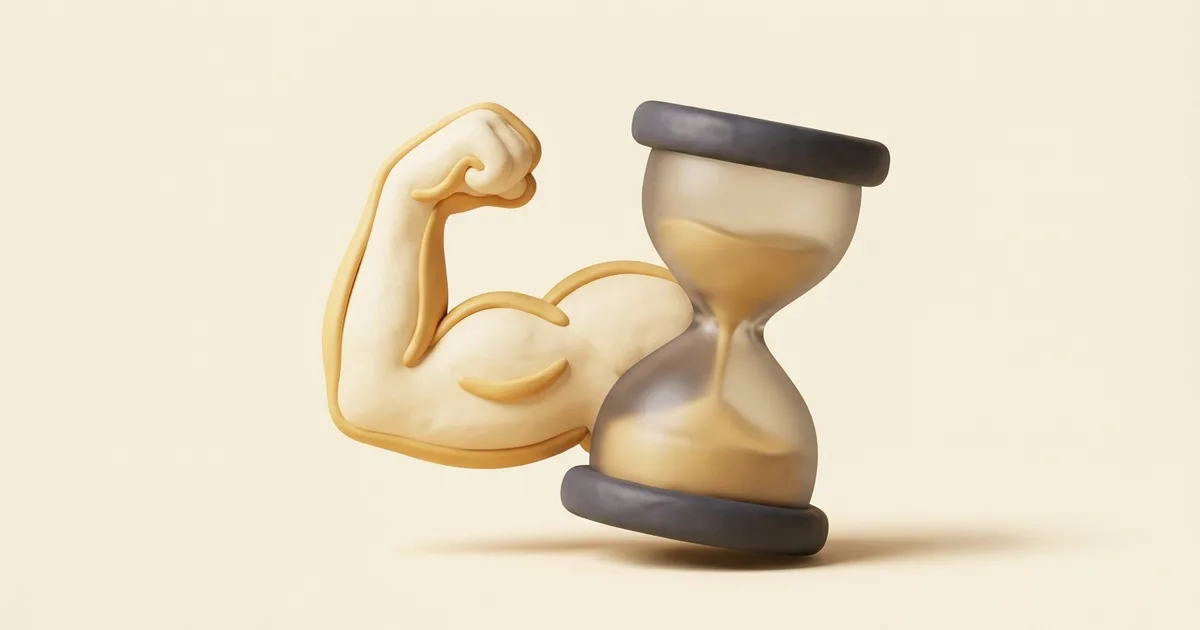
Missing a week of training can trigger real panic — visions of months of progress unraveling overnight. The actual timeline is far more forgiving than that anxiety suggests.
The real timeline
Muscle loss ("detraining") happens on a predictable curve, not a cliff:
- 0–2 weeks off: Essentially no muscle loss. Strength may even feel stable or dip only slightly, largely from reduced neural drive rather than actual muscle tissue loss.
- 2–4 weeks off: Measurable strength decline begins, but muscle size is still mostly preserved. This is the window where "I feel weaker" outpaces "I actually lost muscle."
- 4+ weeks off: Meaningful muscle loss starts to show up in research, accelerating the longer training stays paused — though trained lifters lose muscle more slowly than beginners, a phenomenon researchers call "muscle memory" working in reverse.
The short version: a week or two off from illness, travel or a busy stretch is not a crisis. A month or more of complete inactivity is where real losses start to accumulate.
Why trained lifters bounce back faster
Muscle cells that have been trained before retain more of the cellular machinery (including myonuclei) needed to rebuild size, even after they shrink. This is part of why lifters who return to the gym after a break regain lost muscle noticeably faster than it took to build originally — the infrastructure is still there, waiting to be reactivated.
How to protect muscle during an unavoidable break
- Keep protein intake up, even if training volume drops to zero — protein alone slows muscle loss more than most people expect.
- Do something, even minimally. A single weekly session at reduced volume preserves far more muscle than complete inactivity, research on minimum-effective-dose training suggests.
- Don't panic-train back into old volume immediately. Ease back in over 1–2 weeks to avoid unnecessary soreness and injury risk.
Track this free in GymMonster — on iOS, Android, or right inside Telegram.


Seeing the real picture, not just the fear
The gap between "I feel weaker" and "I actually lost muscle" is exactly where a training log earns its value — a break looks a lot less catastrophic when you can see your actual lift numbers from before it, and watch them climb back with a few solid sessions instead of guessing from memory. Pairing that visibility with progressive overload once you're back in the gym gets you to your previous numbers faster than most people expect.
The takeaway
A week or two off barely registers on the muscle-loss timeline — most of what you feel is reduced neural sharpness, not lost tissue. Real muscle loss takes about a month of total inactivity to meaningfully set in, and even then, trained muscle comes back faster than it was built the first time. Don't let a short break talk you out of getting back in.
Frequently asked questions
How long does it take to lose muscle from not working out?
Meaningful muscle loss generally takes about 3-4 weeks of complete inactivity to become measurable, with losses accelerating the longer training stays paused. A week or two off causes little to no actual muscle loss.
Does muscle turn into fat if you stop working out?
No — muscle and fat are different tissue types and one cannot convert into the other. Muscle can shrink from disuse while fat can increase from reduced activity and unchanged eating, which creates the illusion of conversion.
How fast does muscle come back after a break?
Trained lifters regain lost muscle noticeably faster than it took to build originally, thanks to retained cellular structures from prior training — often called muscle memory.
Should I keep training at all during a busy period?
Yes, if possible — even one reduced-volume session per week preserves substantially more muscle than complete inactivity.
Start tracking your workouts free
GymMonster is free on iOS and Android — or open it right inside Telegram, no download needed. Log your first set in under a minute.