
Calisthenics Skill Progressions: How to Build Toward Muscle-Ups, Planche, and Handstands
2026-10-18 · 4 min read
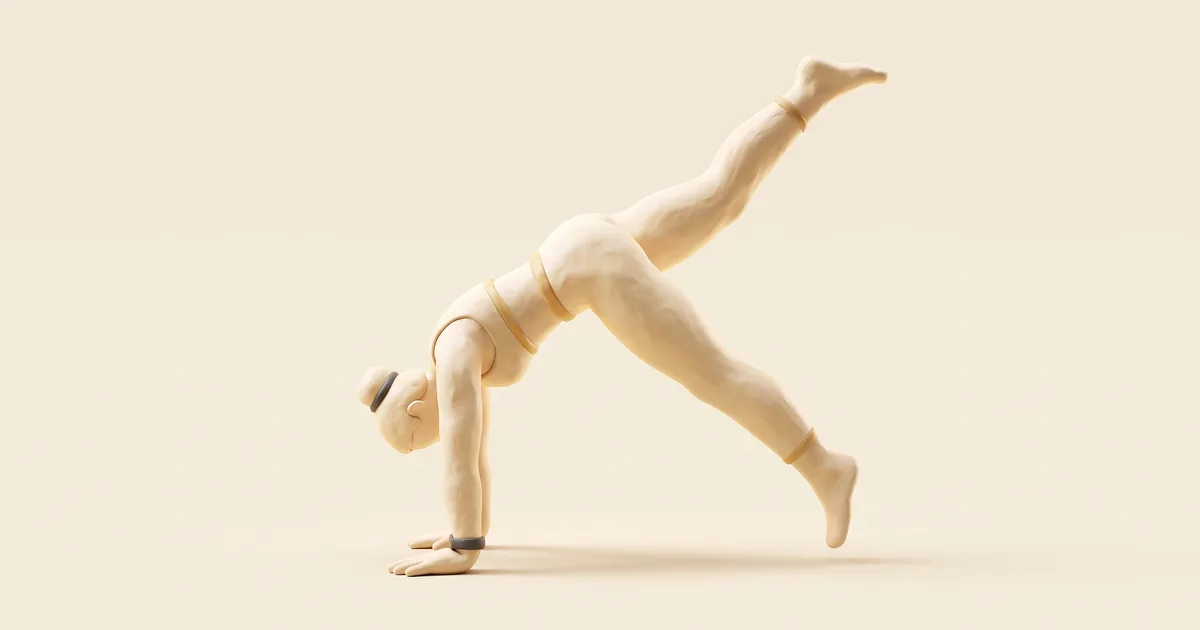
Advanced calisthenics skills like the muscle-up, planche, and handstand look like a single dramatic leap from basic bodyweight training, but they're actually the result of a long chain of smaller progressions, each one building the specific strength and control the next step needs. Understanding calisthenics progressions properly — rather than jumping straight to the advanced skill — is what makes these movements achievable without injury.
The short answer
- Advanced skills are built through progressions, not attempted directly — each step develops the strength the next step requires.
- Pull-up → muscle-up requires building both a strong pull-up and a strong dip, plus the transition technique connecting them.
- Plank → planche progresses through several lean-forward positions (tuck, advanced tuck, straddle) that gradually shift more bodyweight onto the arms.
- Handstand progressions start with wall-supported holds and build toward free-standing balance before any freestanding hold is attempted.
- Progress based on control, not just repetition count — moving to the next step before you have solid control of the current one is the main cause of setbacks.
Pull-up to muscle-up
The muscle-up combines a pull-up with a dip, transitioning your body from below the bar to above it. The progression generally looks like this:
- Strict pull-ups — build to a solid set of 8-10 controlled reps before attempting anything more advanced.
- High pull-ups / chest-to-bar pull-ups — pulling higher than a standard pull-up, which starts building the extra height the transition needs.
- Explosive pull-ups — adding speed and power to the pull, since the muscle-up transition requires momentum, not just strength.
- False grip practice — learning the wrist position (grip rotated over the bar) that makes the transition physically possible.
- Muscle-up transition drills — practicing the specific "roll over the bar" movement, often assisted with a resistance band or lower bar.
- Full muscle-up — once the explosive pull, false grip, and transition all connect.
Rushing straight to muscle-up attempts without the explosive pulling strength or false grip control is a common way people either fail repeatedly or strain their shoulders and wrists.
Plank to planche
The planche — holding the body horizontal in the air, supported only by the hands — is one of the most demanding calisthenics skills and takes a long progression to build safely.
| Step | Description |
|---|---|
| Planche lean | Standard plank position, leaning shoulders forward past the hands to build wrist and shoulder tolerance |
| Tuck planche | Knees pulled to chest, hips lifted, bodyweight shifted onto the arms in a compact position |
| Advanced tuck planche | Hips extended further while knees stay tucked, increasing the lever length |
| Straddle planche | Legs extended wide apart, reducing leverage difficulty compared to full legs-together |
| Full planche | Legs fully extended and together, the most demanding version of the hold |
Each step should be genuinely comfortable — held with good control for a meaningful duration — before adding the next step's increased leverage. Wrist strength and mobility also need to build alongside these steps, since the planche places significant load through the wrists.
Track this free in GymMonster — on iOS, Android, or right inside Telegram.


Handstand progressions
- Wall-supported handstand (chest to wall) — builds the shoulder strength and overhead position comfort.
- Wall-supported handstand (back to wall) — a more realistic hand and body alignment than chest-to-wall.
- Wall walks — walking the feet up a wall into a handstand position, building control through the transition.
- Freestanding handstand attempts with a spotter or near a wall — short, controlled holds away from support.
- Freestanding handstand — balancing without any support, built through repeated short attempts rather than one long hold.
Handstand training is as much about balance and small hand/finger adjustments as it is about strength, which is why it typically takes longer, more frequent practice (short sessions, often) rather than infrequent max-effort attempts.
General principles across all progressions
- Control matters more than reps. A shaky, barely-controlled rep of the next progression step is a sign to spend more time on the current step, not a green light to move on.
- Volume and frequency build skill. Skill-based progressions, especially handstands, often respond better to frequent short practice sessions than infrequent long ones.
- Strength progressions need real recovery too. Planche and muscle-up training place real demand on the shoulders and wrists — don't stack maximal attempts every single day.
- A progression isn't strictly linear for everyone. Some steps may take weeks, others months, depending on your starting strength and body proportions.
The bottom line
Calisthenics skills like the muscle-up, planche, and handstand are the product of deliberate step-by-step progressions, not brute-force attempts at the final movement, and moving through each step under real control is what keeps the process both effective and safe. Because these progressions can take months, logging each session in GymMonster — including which progression step you're on and how many controlled reps or seconds you held — turns a long, sometimes hard-to-see process into something you can actually track and watch build over time.
Frequently asked questions
How long does it take to get a muscle-up?
It varies widely by starting strength, but building the pull-up strength, explosive pulling power, and transition technique typically takes several months of consistent training for most people.
Do I need to be able to do a pull-up before training for a muscle-up?
Yes. A solid, controlled set of strict pull-ups is the foundation the muscle-up progression builds on, along with dip strength and the false grip transition.
What is a tuck planche?
A tuck planche is an early planche progression where the knees are pulled to the chest and the hips lifted, supporting the body on the arms in a compact position before progressing to more extended, harder versions.
Can beginners start handstand training?
Yes, starting with wall-supported holds. Freestanding handstands are a later step in the progression built up through wall support, wall walks, and short supported attempts.
Why shouldn't I skip steps in a calisthenics progression?
Skipping steps means attempting a movement before you have the specific strength and control the next step requires, which increases injury risk (especially to wrists and shoulders) and usually leads to stalled progress.
Start tracking your workouts free
GymMonster is free on iOS and Android — or open it right inside Telegram, no download needed. Log your first set in under a minute.