
Bodyweight Resistance Training: How to Build Strength With No Equipment
2026-10-14 · 4 min read
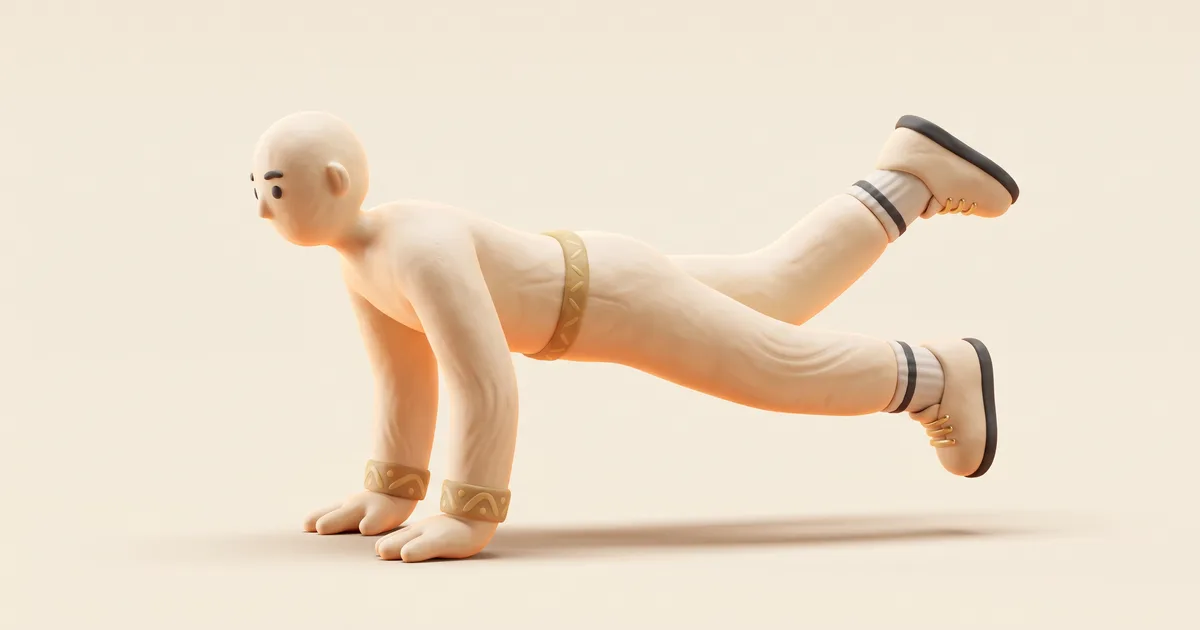
Bodyweight resistance training means using your own body as the load — push-ups, squats, lunges, dips, rows, planks — instead of barbells, dumbbells, or machines. Interest in "no equipment workout" and "bodyweight strength training" has grown steadily as people look for ways to train at home, while traveling, or without a gym membership.
The short version: bodyweight training builds real, measurable strength and muscle, but you have to progress it deliberately. Since you can't just add a 2.5kg plate, you need other ways to make the work harder over time.
The short answer
- Bodyweight training works for building strength, muscle, and endurance — it's resistance training, not "just cardio."
- The big four movement patterns are push (push-ups, dips), pull (rows, pull-ups), squat (squats, lunges), and hinge (glute bridges, single-leg deadlifts).
- Progression without added weight comes from tempo, leverage, range of motion, and single-limb variations — not just doing more reps forever.
- A pull option is the hardest gap to fill — rows and pull-ups need a bar, ledge, or sturdy table edge, so plan for that separately.
- It pairs well with tracking — logging sets, reps, and how a movement felt is how you know if you're actually progressing.
Why bodyweight training counts as resistance training
Resistance training is any training where a muscle works against opposing force — that force doesn't have to be a barbell. A slow push-up loads the chest, shoulders, and triceps with a meaningful percentage of your body weight, and a single-leg squat can load one leg with more than your full body weight relative to that limb. The muscle doesn't know or care whether the resistance is a dumbbell or gravity acting on your own mass.
The limitation isn't stimulus quality — it's how easily you can increase the load. A gym lifter adds 5kg to a bench press in a way a bodyweight trainee can't just add to a push-up. That's the real design problem bodyweight training has to solve.
The four ways to progress without adding weight
- Leverage. Change the angle so more of your body weight loads the working muscle — feet elevated on a push-up, or hands elevated to regress it.
- Range of motion. A deeper squat or a push-up with hands on parallettes (extra chest stretch) recruits more muscle through a longer range.
- Tempo and pauses. Slowing the lowering phase to 3-4 seconds, or pausing at the hardest point, increases time under tension without changing the exercise.
- Unilateral (single-limb) work. A pistol squat, single-arm push-up progression, or single-leg glute bridge roughly doubles the load on the working limb compared to the two-limb version.
Combine these in order: most people should exhaust rep progression and tempo before jumping to a much harder leverage or single-limb variation, the same way you wouldn't jump 20kg on a squat in one session.
A simple bodyweight progression table
| Movement pattern | Beginner | Intermediate | Advanced |
|---|---|---|---|
| Push | Incline push-up | Standard push-up | Decline or archer push-up |
| Pull | Inverted row (high bar) | Inverted row (low bar) | Pull-up |
| Squat | Bodyweight squat | Bulgarian split squat | Pistol squat progression |
| Hinge | Glute bridge | Single-leg glute bridge | Single-leg RDL (bodyweight) |
| Core | Plank | Hollow body hold | Dragon flag progression |
Track this free in GymMonster — on iOS, Android, or right inside Telegram.


Building a bodyweight session
A full-body bodyweight session works well 3 times a week, structured around the same principles as any beginner gym routine template: one push, one pull, one squat, one hinge, and core, for 2-4 sets of 6-15 reps depending on the variation's difficulty. Rest 60-90 seconds between sets for most movements.
Unlike a loaded barbell lift, bodyweight exercises don't have a fixed "1RM" to work percentages off. Instead, pick a variation where your target rep range is genuinely hard by the last 1-2 reps — if you're breezing past 20 reps on standard push-ups, it's time to move to a harder leverage variation, not just add more reps indefinitely.
What bodyweight training does well — and where it falls short
Bodyweight training excels at pushing patterns (push-ups, dips) and single-leg lower body work, and it needs almost no setup or cost. It falls short for pulling strength, since rows and pull-ups require a bar or edge, and it eventually plateaus for very advanced lifters who've maxed out leverage and single-limb progressions — at that point, external load (bands, weight vests, dumbbells) becomes the more efficient path forward. Comparing calisthenics vs weights is worth reading if you're deciding which direction to go long-term.
The bottom line
Bodyweight resistance training is legitimate strength training, not a lesser substitute — the key is progressing deliberately through tempo, leverage, and unilateral variations instead of expecting endless rep increases to keep working. Since there's no weight number to track, logging your sets, reps, and which variation you used in GymMonster is how you actually see the progression happening over weeks, rather than guessing whether last month's push-ups were harder or easier than this month's.
Frequently asked questions
Can you build muscle with bodyweight training alone?
Yes. Muscle growth requires progressive tension on a muscle, not a specific type of equipment. Bodyweight training can build meaningful muscle, especially for beginners and intermediates, as long as you keep making the exercises harder over time.
How do I progress a bodyweight exercise without equipment?
Use tempo (slow the lowering phase), leverage (change the angle to load more body weight), range of motion (go deeper), or single-limb variations (one arm or one leg instead of two) once standard rep increases stop being challenging.
What's the hardest muscle group to train with bodyweight only?
The back and biceps (pulling muscles) are hardest, since effective pulling exercises like rows and pull-ups need a bar, table edge, or similar anchor point rather than just open floor space.
How many bodyweight workouts per week are enough?
Three full-body sessions per week, with a day of rest between most sessions, is enough to build strength and muscle for most people, especially beginners.
Is bodyweight training better than weights?
Neither is universally better — bodyweight training is more accessible and portable, while weights make progressive overload simpler to track and apply. Many lifters use both depending on their situation.
Start tracking your workouts free
GymMonster is free on iOS and Android — or open it right inside Telegram, no download needed. Log your first set in under a minute.